
Hup! Two, Three Four!
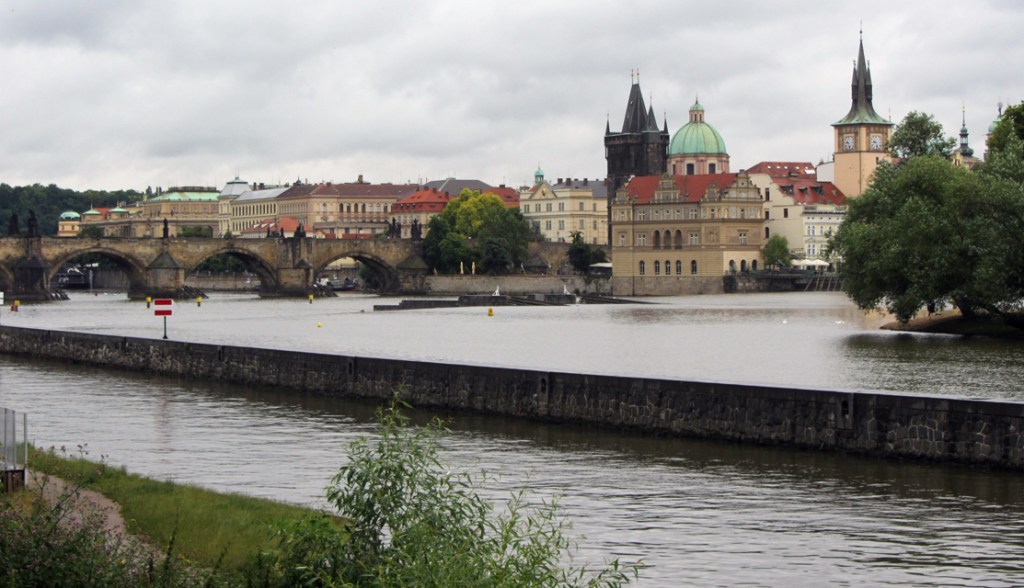
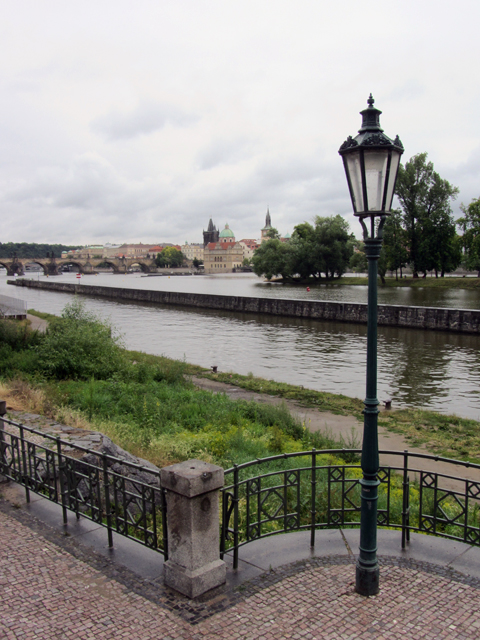
Today, it was Walking Tour Day. The morning commenced with a guided tour-about-town with the balance of the day free for self-exploration. Leaving the hotel, we were escorted across the Vltava River to the Lesser Town, where we began exploring Kampa Island. This man-made island-in-the-city is situated between the Vltava River and the Čhertovka Canal — or “Devil’s Canal” — originally dug to power the numerous water mills that once lined it’s banks. Now, the island is an oasis of grassy areas, museums, outdoor sculptures and odd attractions.
Measuring Up
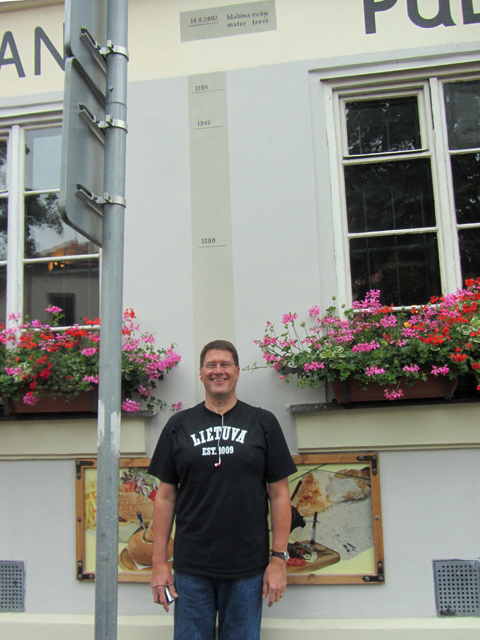
The Kampa Island area has been plagued over the centuries with flooding as can be seen by the dated lines on this building’s wall. My 1.9 meters of height paled in comparison.
Oh, Baby!
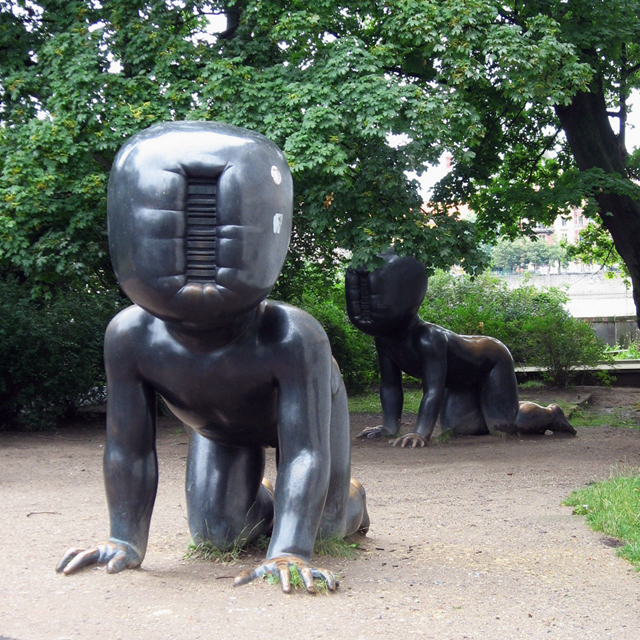
Our first taste of the street art of Prague were these enormous outdoor sculptures of big naked faceless bronze babies. The Czech artist is David Cerny and these weird, alien babies were located adjacent to the Kampa Museum. Their siblings can also be seen crawling up the Prague TV Tower — the artist’s whimsical attempt to beautiful a completely utilitarian structure.
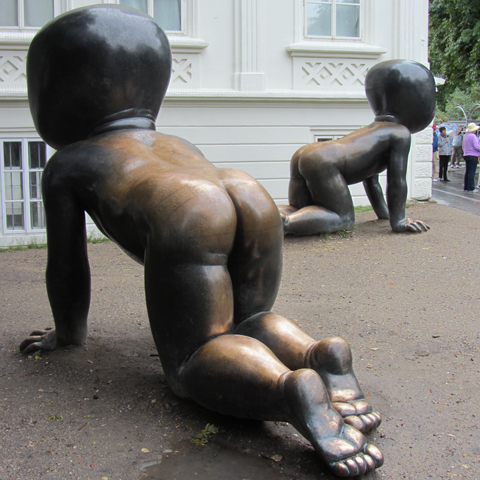
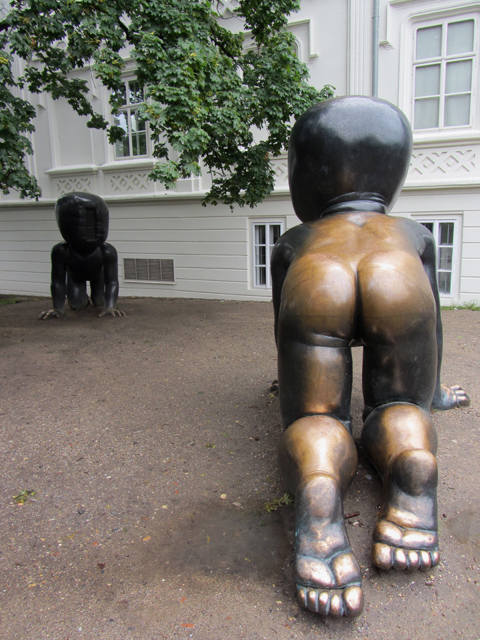
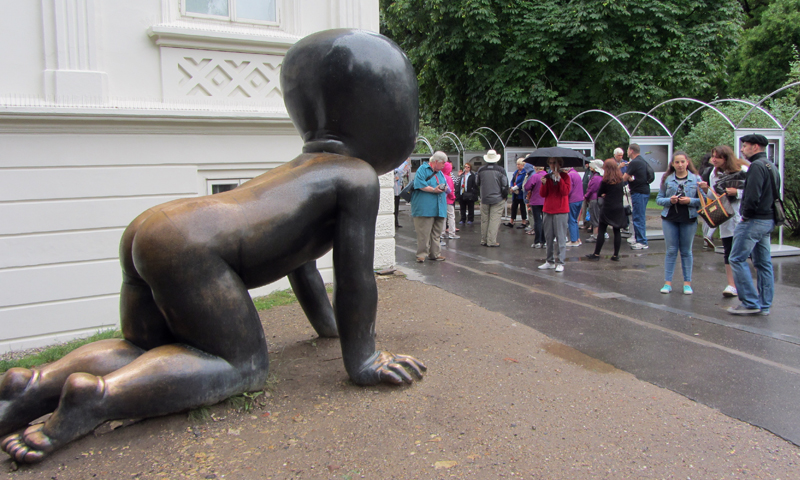
“D’oh!”
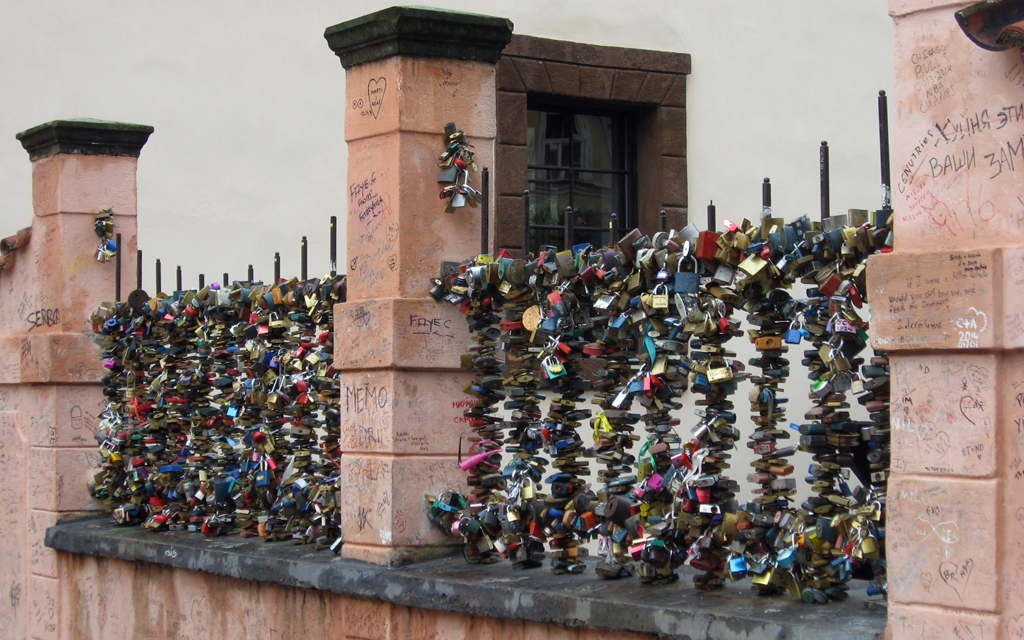
Leaving the disturbingly-huge babies behind, we crossed a small pedestrian bridge spanning the Devil’s canal, taking us off Kampa Island and into the Malá Strana (Lesser Town) district of Prague. The bridge’s iron railings were covered with love locks. Once again, we smacked our foreheads for not thinking to bring one of ours to add to the assemblage.
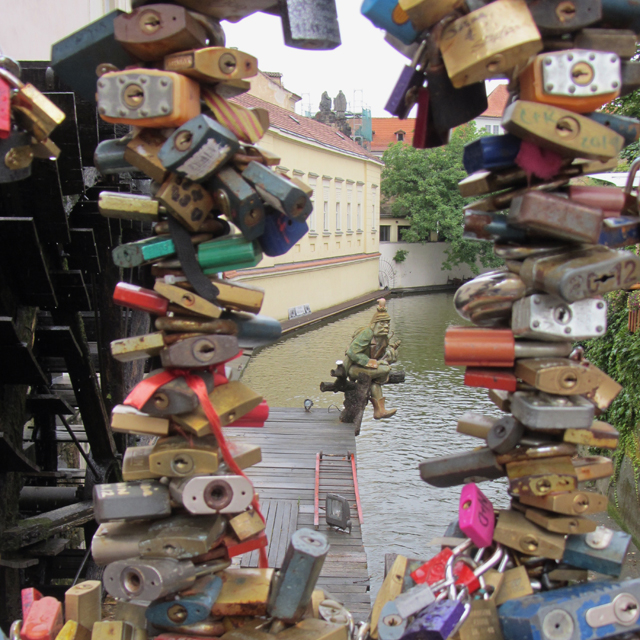
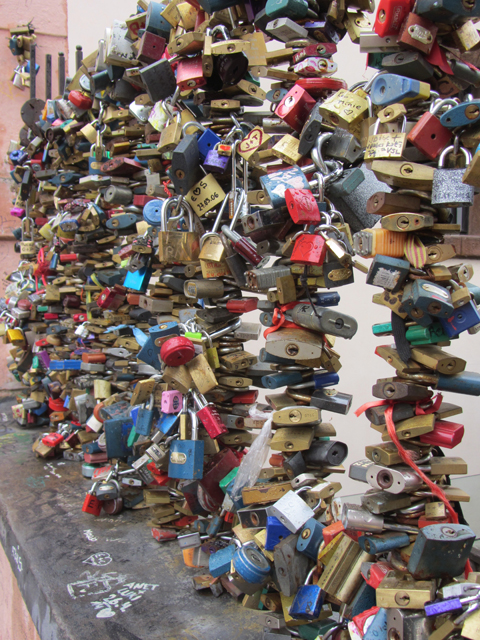
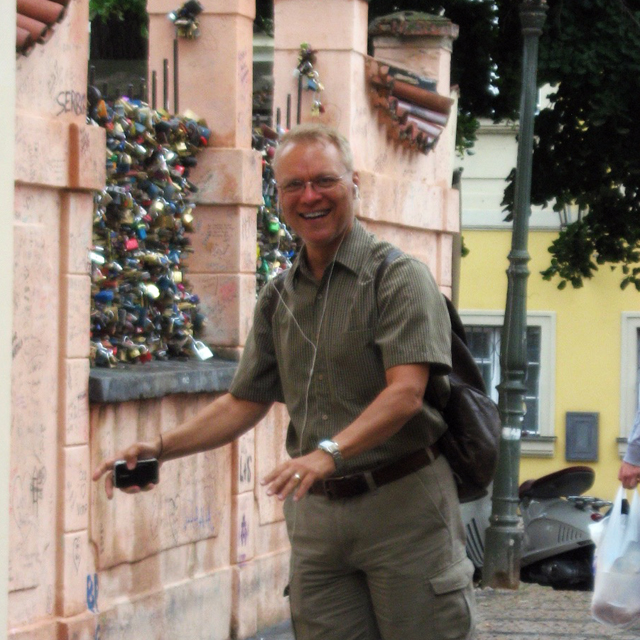
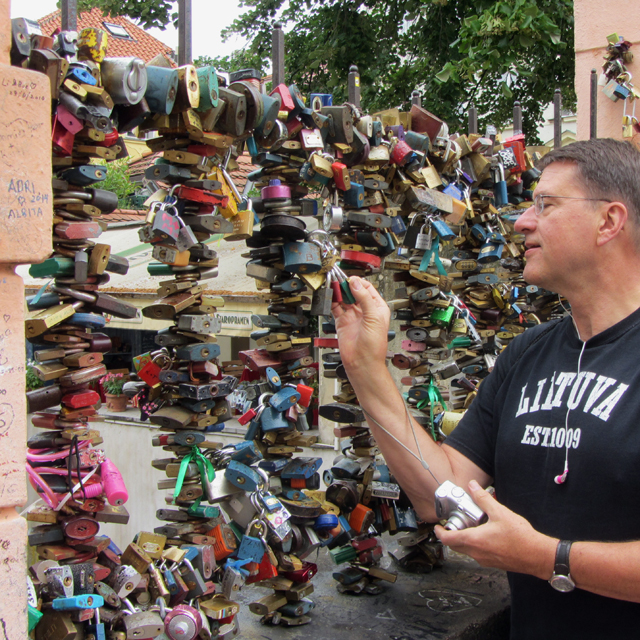
Instant Karma!
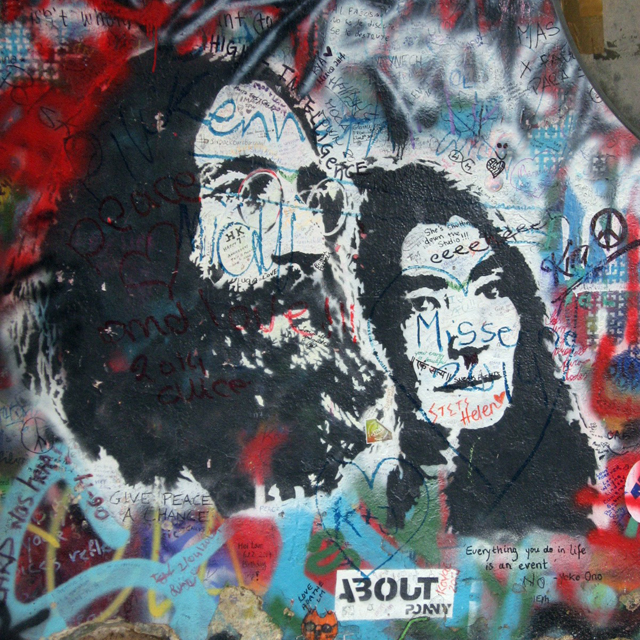
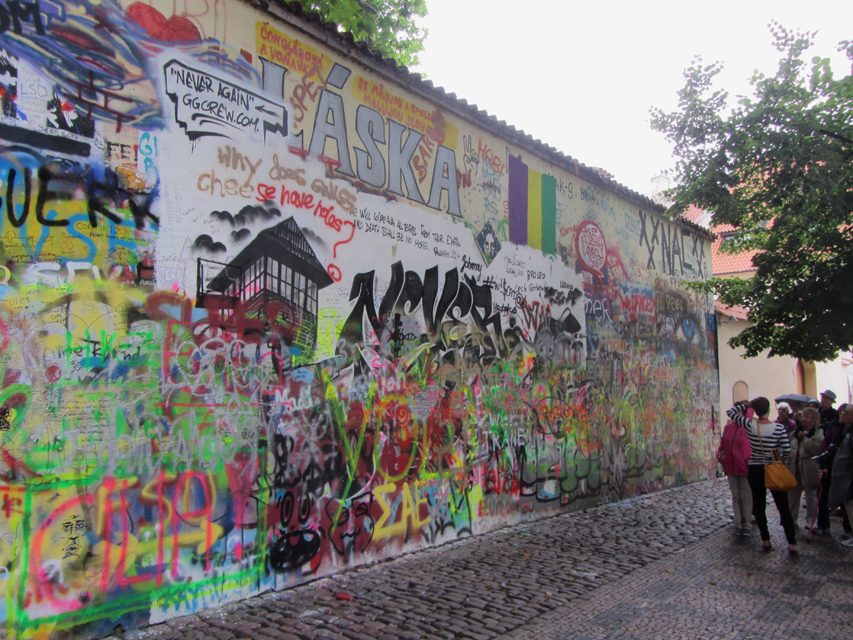
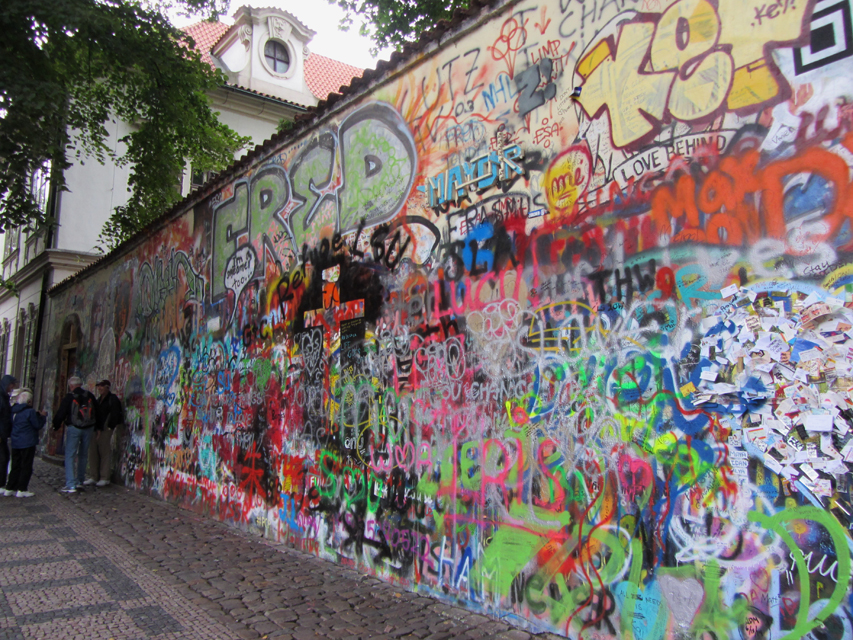
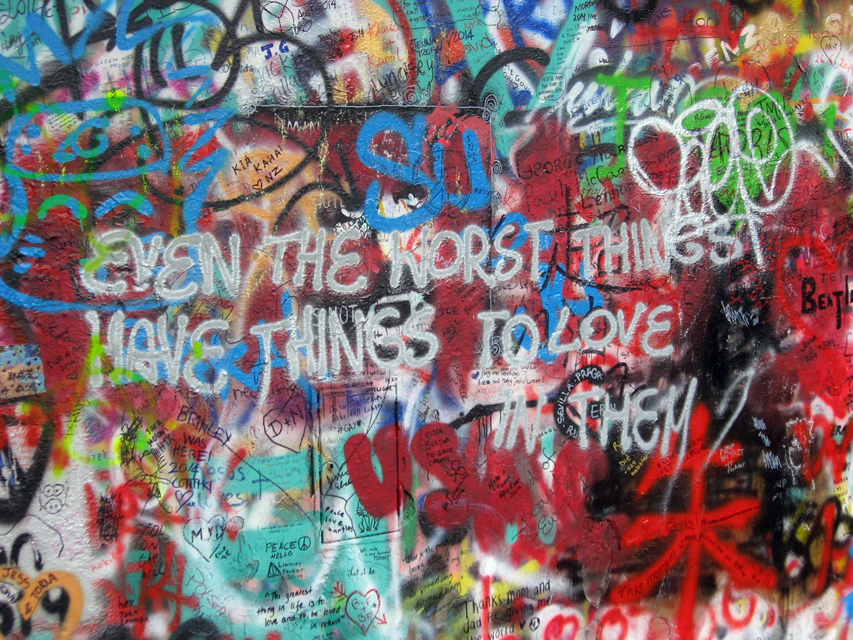
A little further along, we came upon the John Lennon Wall. Originally comprised of a single portrait and some song lyrics after his assasination in 1980, the original Lennon portrait has long-since disappeared under many fresh layers of Lennon-inspired graffiti, Beatles’ song lyrics and messages of love and peace. An irritant to the communist regime after the Prague Spring and before the fall of communism, it was often painted over by the authorities–only to be reborn with newly-painted flowers and messages.
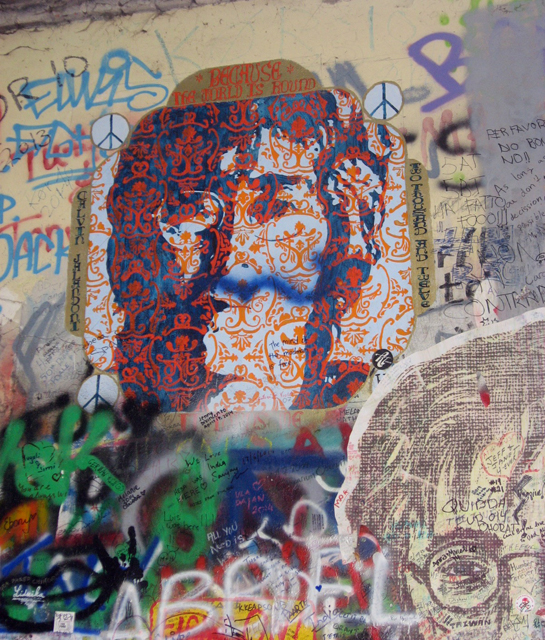
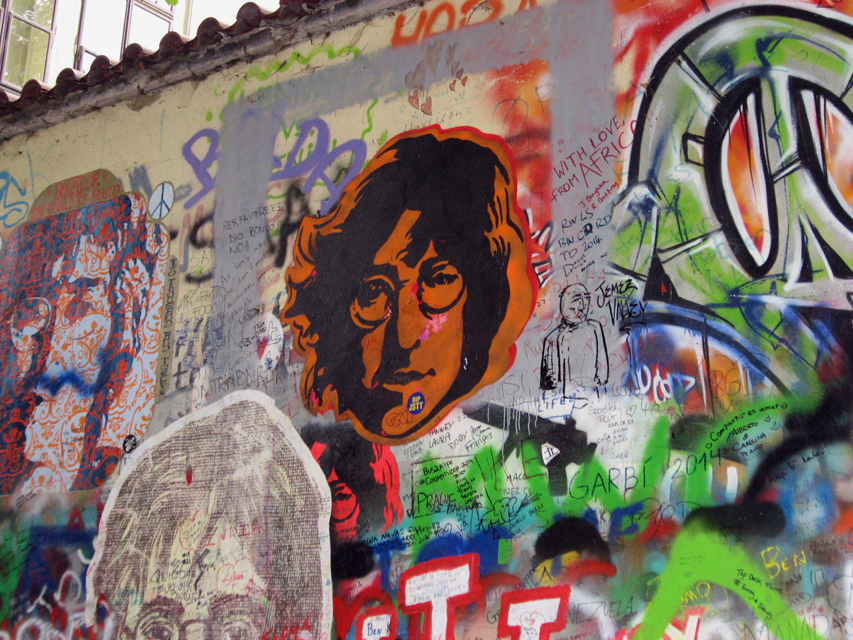
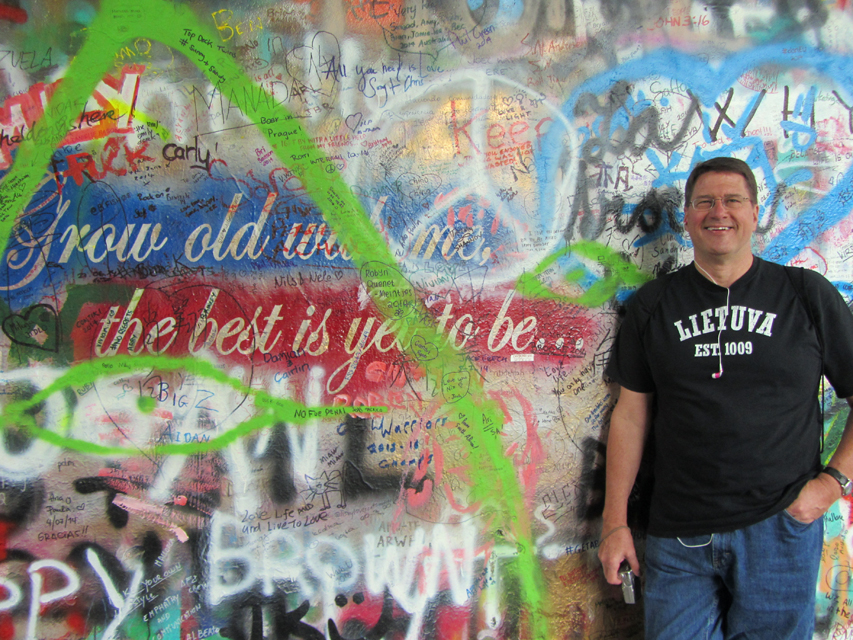
Our tour continued, allowing for some browsing in a local market before climbing the staircase leading up to the famous Charles Bridge spanning the Vltava River to the Old Town.
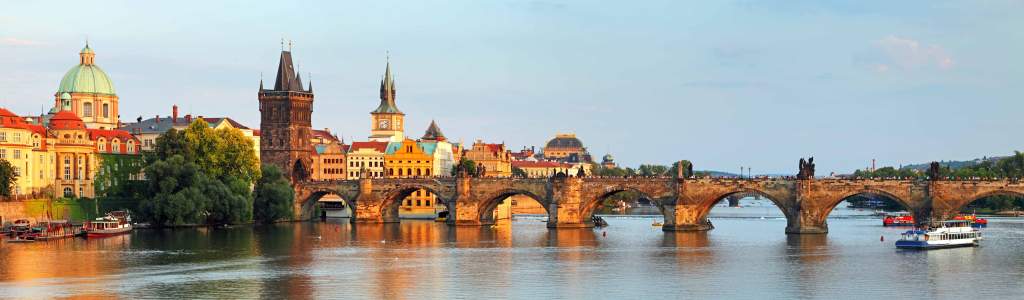
The current bridge was started in the 14th century by King Charles IV–hence the name. It is decorated by a continuous alley of thirty statues depicting saints and patron saints venerated at the time leading from the Castle Hill side to the Old Town side where it passes through the Old Town Bridge Tower’s arches. Arriving here early in the morning as we did, the bridge did not contain a solid wall of gawking tourists…yet. However, the crowds were thick enough that, along with the height and darkened surfaces of the statuary on this overcast day, it was difficult to get any good photos of these watchful guardians of the bridge.
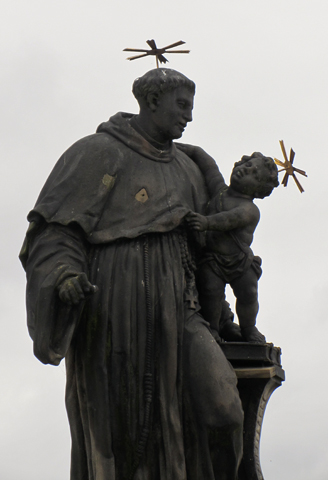
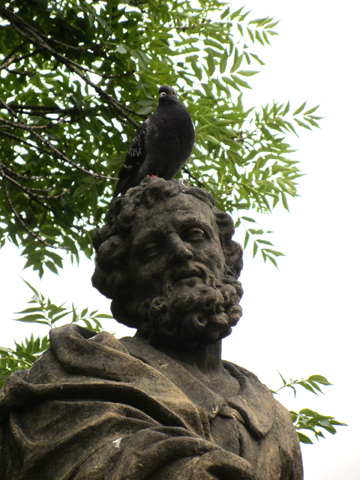
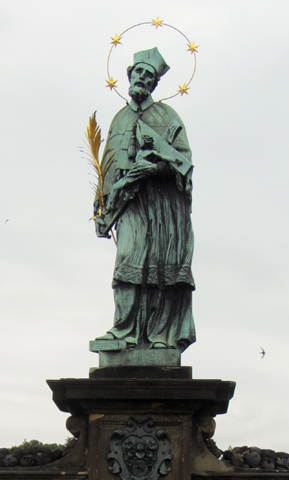
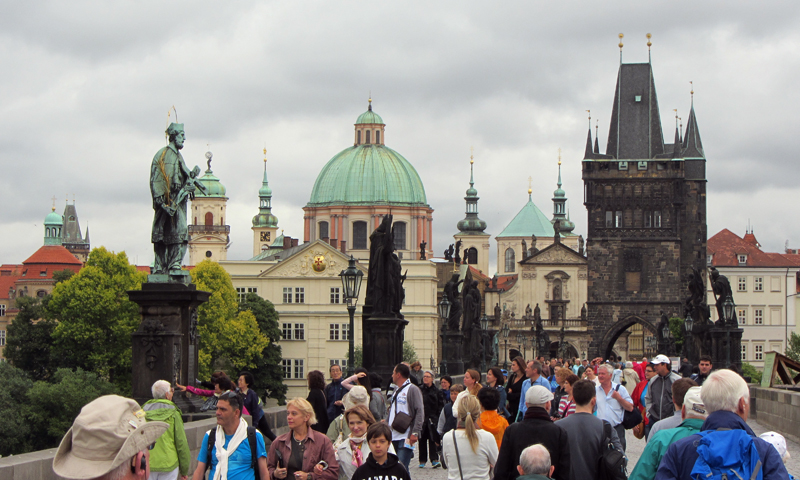
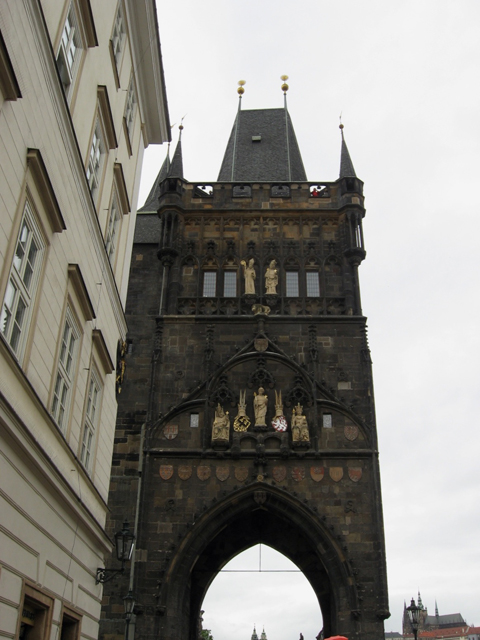
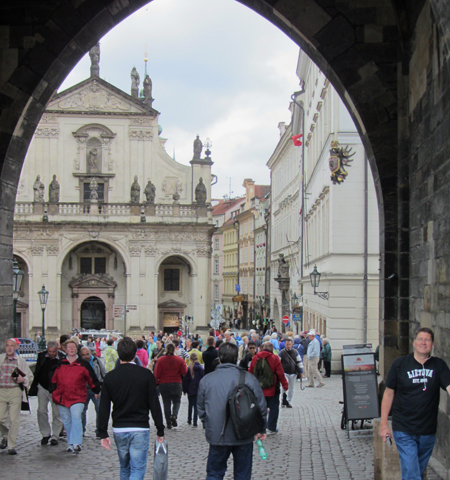
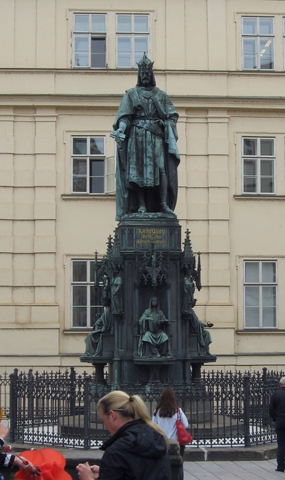
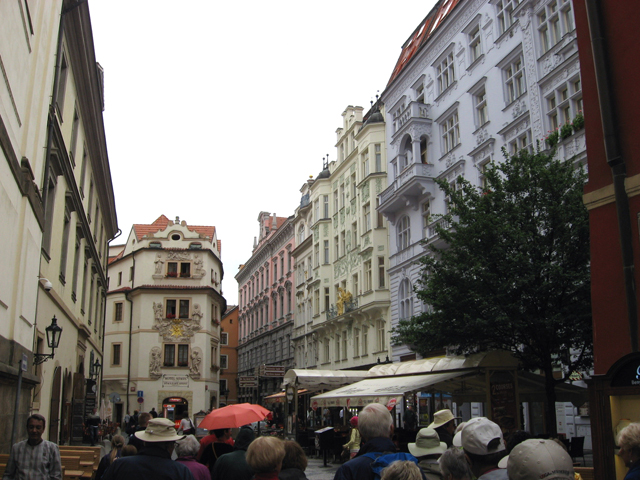
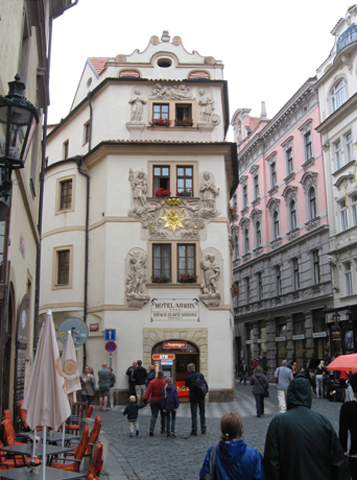
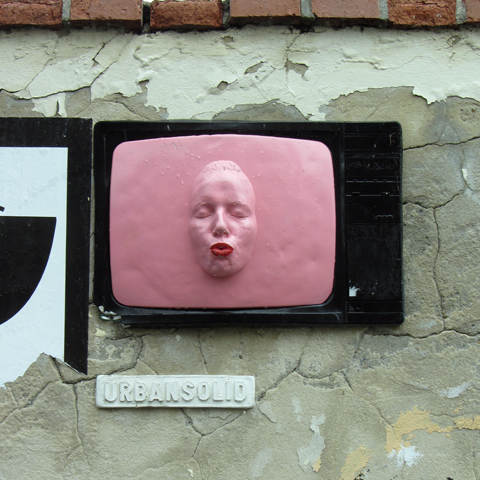
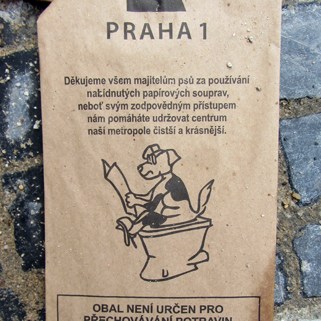
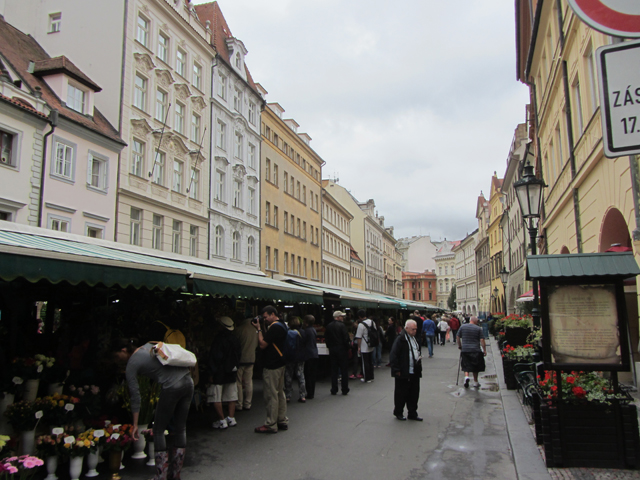
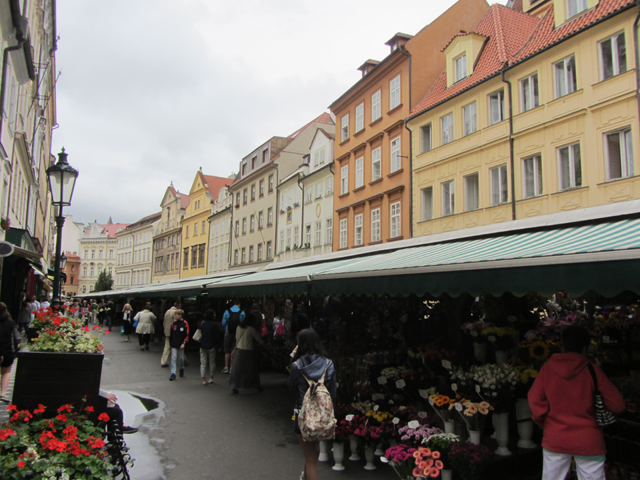
Once across the bridge and through the tower arches, we entered the Old Town (Staré Mesto) along with “millions” of other tourists. As we made our way from the Charles Bridge to Prague’s Old Town square through the crowded pedestrian streets, we encountered many weird and wonderful sights. They brought a uniqueness and/or quirkiness to the Old World charm of the area. Here is a little taste of the whimsy that is Prague.
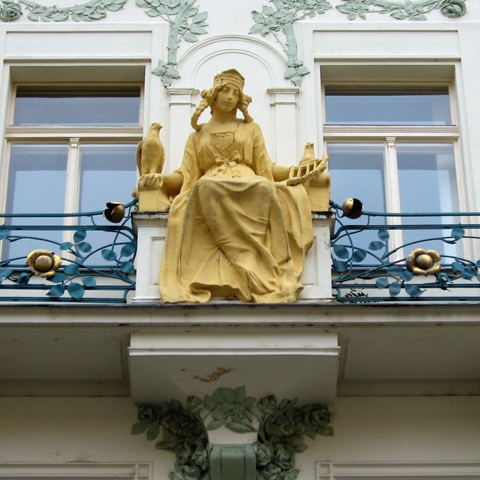
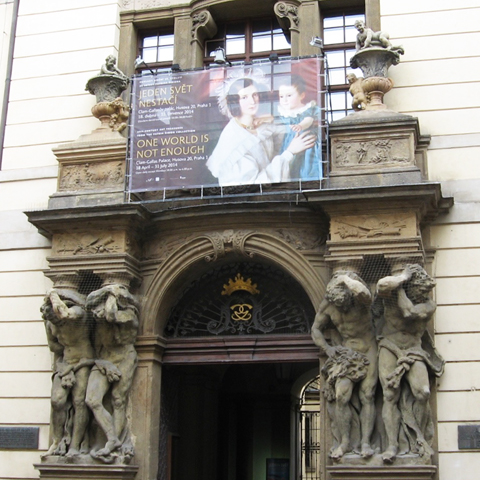
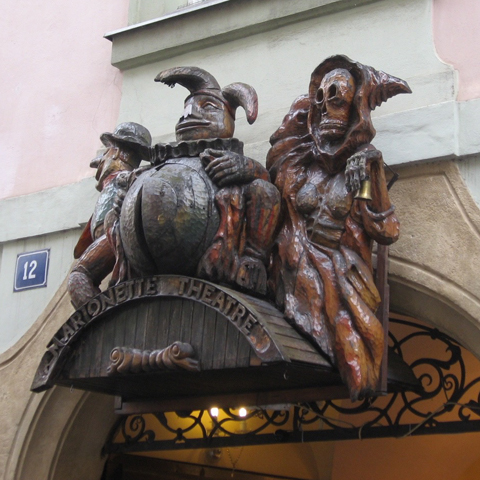
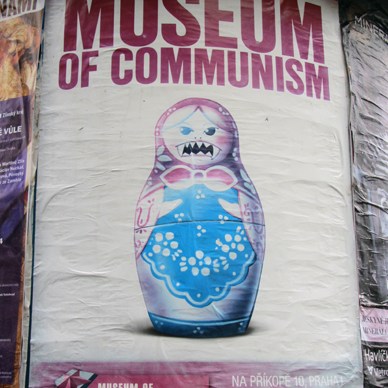
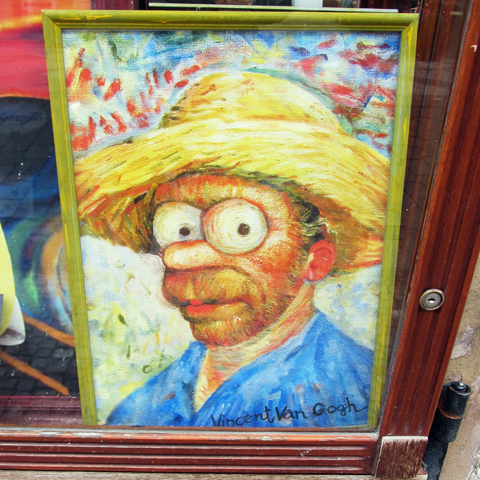
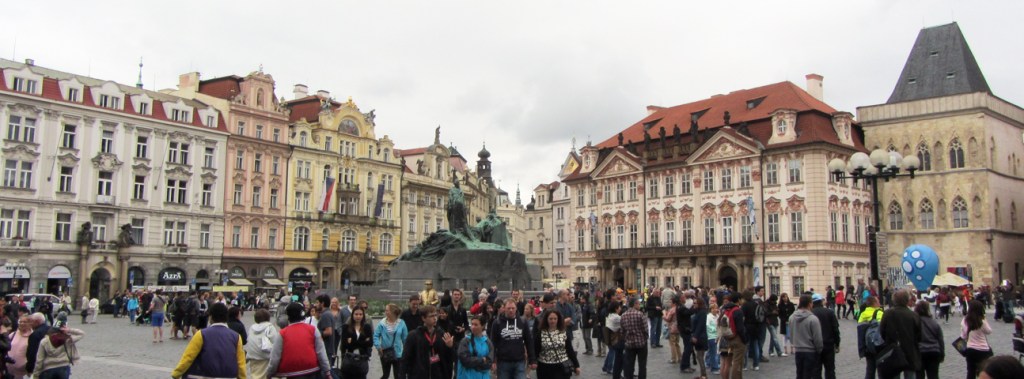
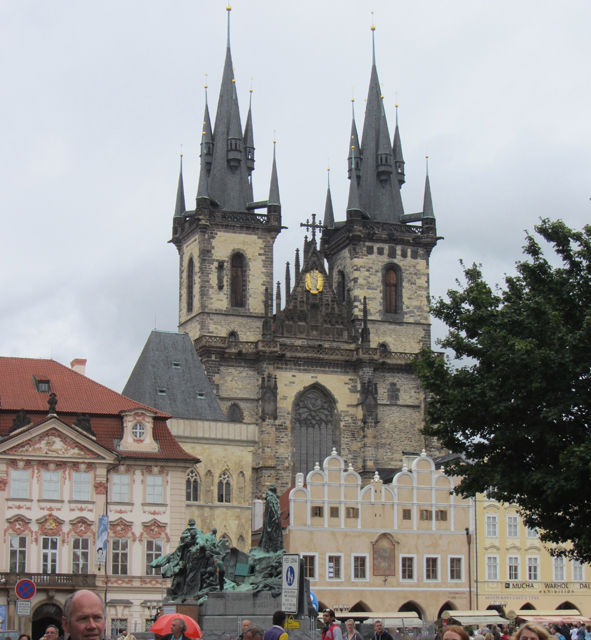
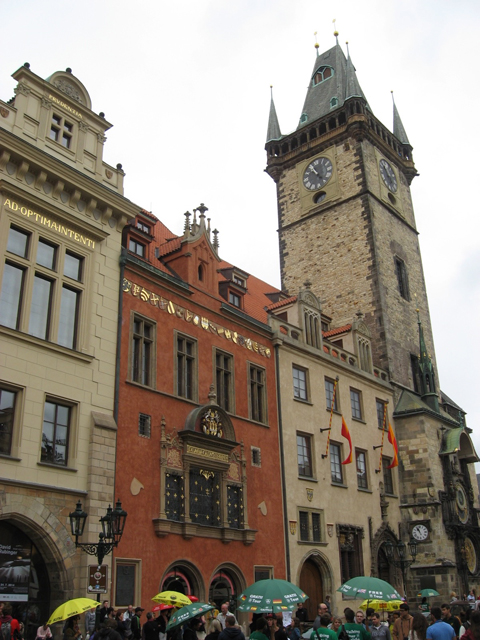
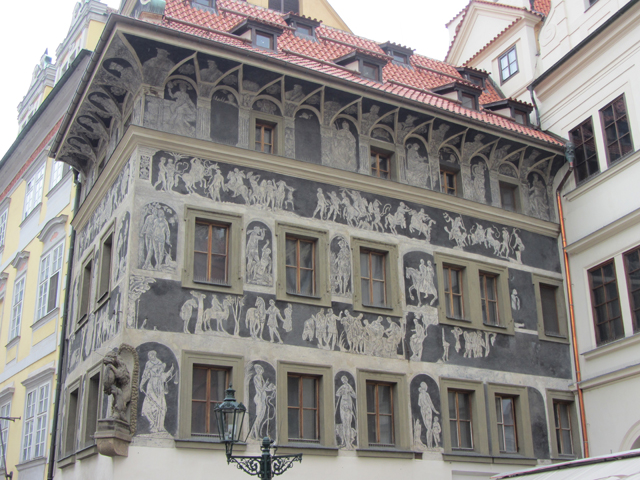
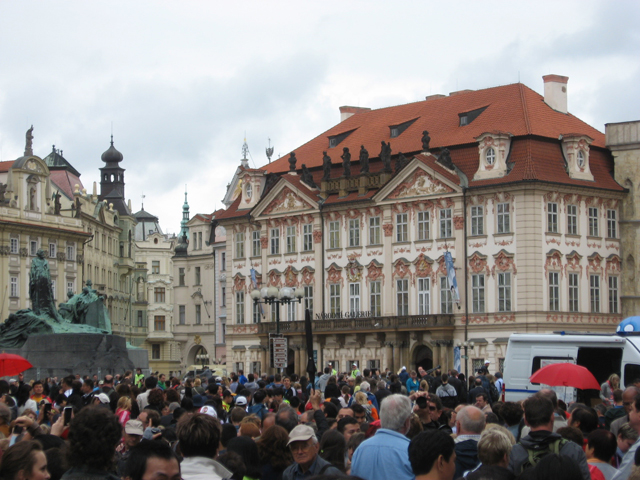
Distractions aside, we reach Prague’s Old Town Square. Now overrun with visitors, it is nonetheless a visual feast of different architectural styles in the palaces, houses, churches and government buildings that border and define this lively urban space. Styles run from the Gothics — Gothic, Gothic Revival, Neo-Gothic — to Baroque and Rococo and beyond.
Time and Time Again
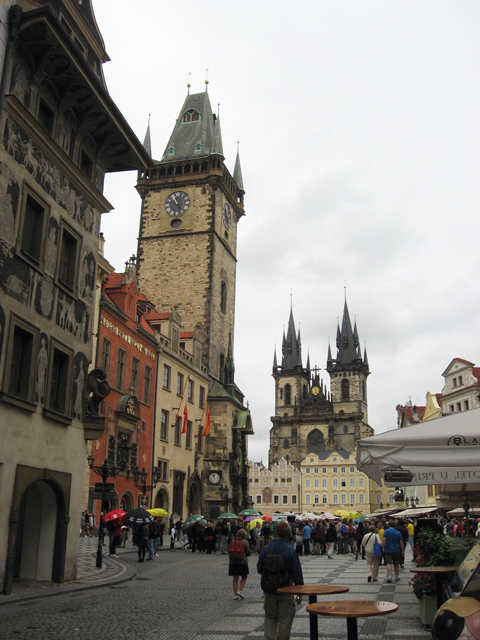
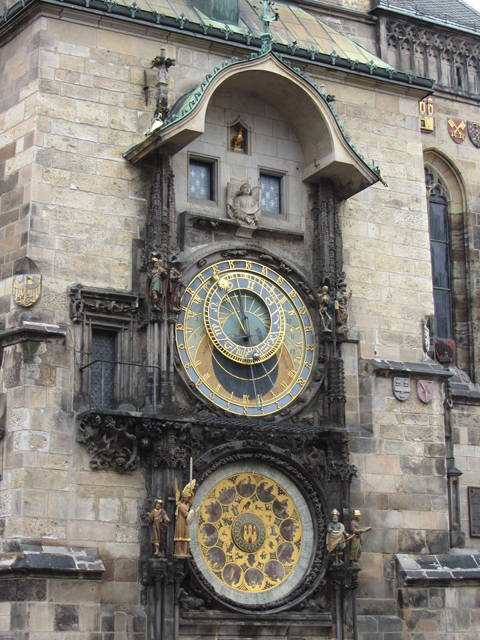
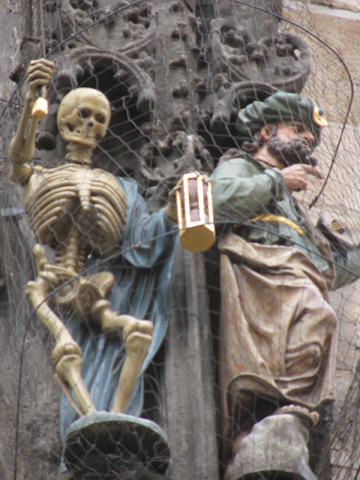
Just before crossing the Old Town Square, we come upon one of Prague’s most popular hourly attractions. Located in the Old Town Hall Tower, the Prague Orloj is a medieval astronomical clock that “performs” every hour on the hour from 9 AM to 9 PM. Four animated figures flanking the clock signal the start of the hourly ritual beginning with Death (in the photo below) ringing his bell. This signals the start of the parade of the Apostles which can be seen through the two (now-curtained) windows above the clock’s assemblage of massive dials.
Sanctuary
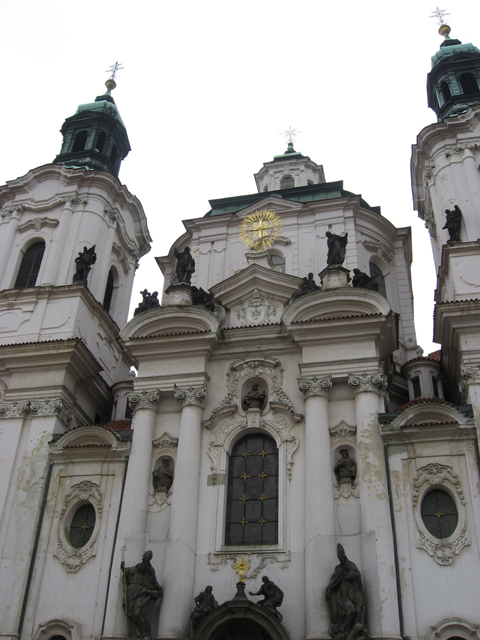
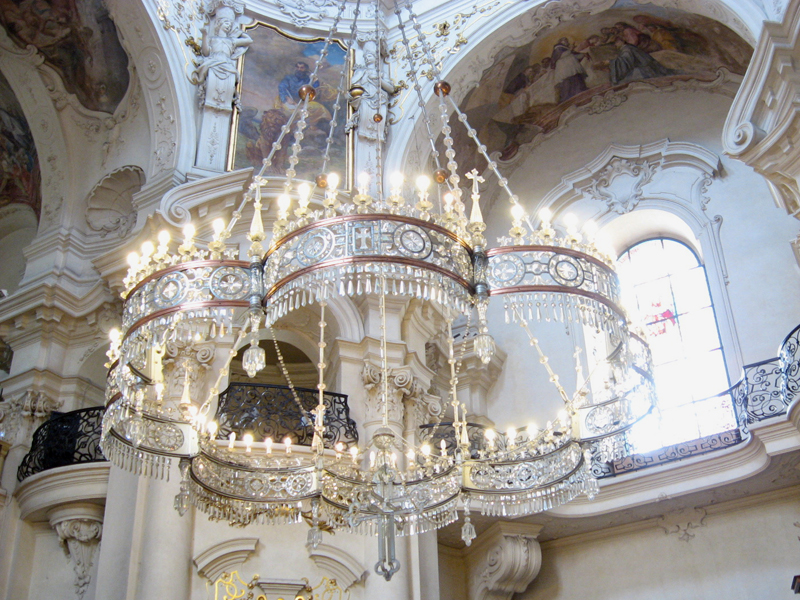
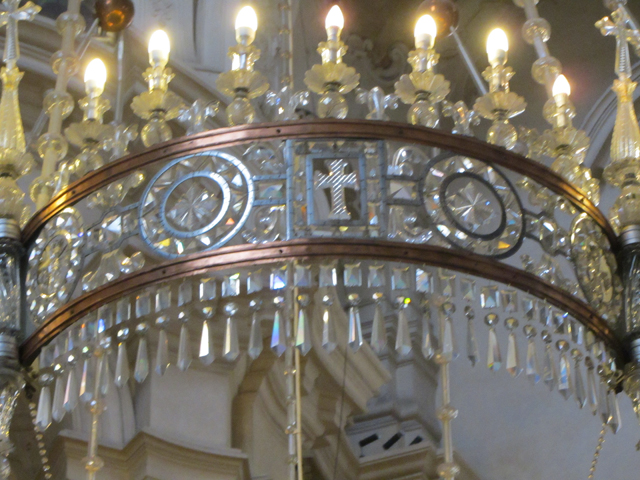
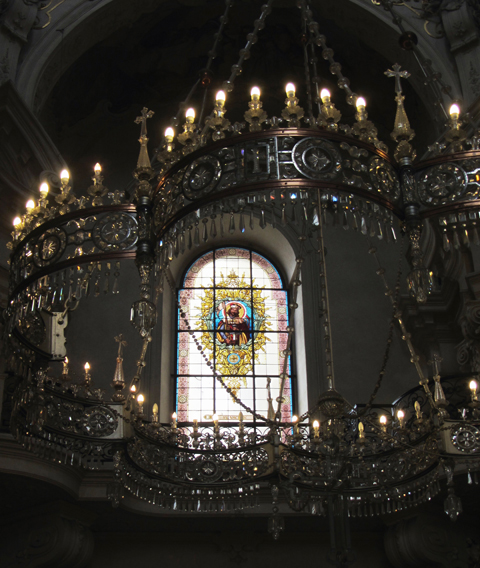
Wary of pickpockets — more on that later — we take a brief respite from the hustle and bustle of the touristing hordes and step into St. Nicholas Church just off the square. We are duly impressed by the huge crystal chandelier over the church’s transept.
Yum!
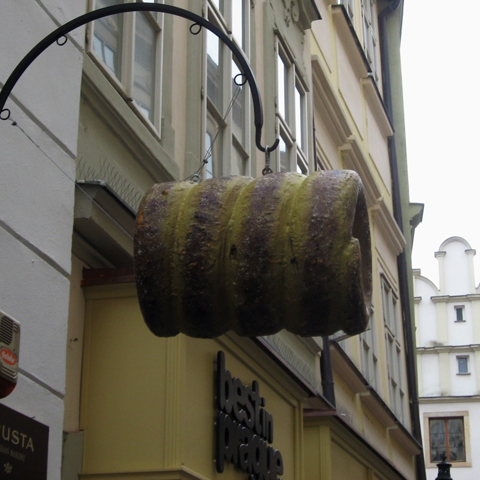
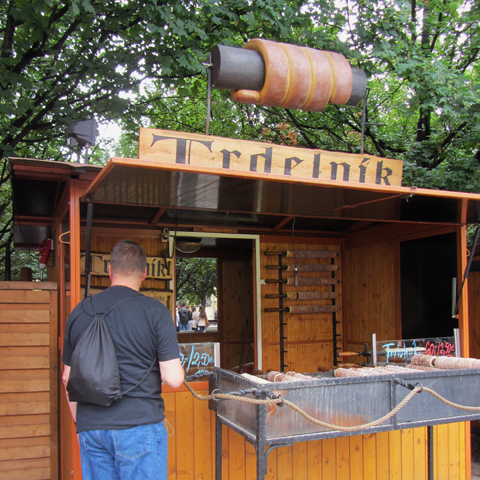
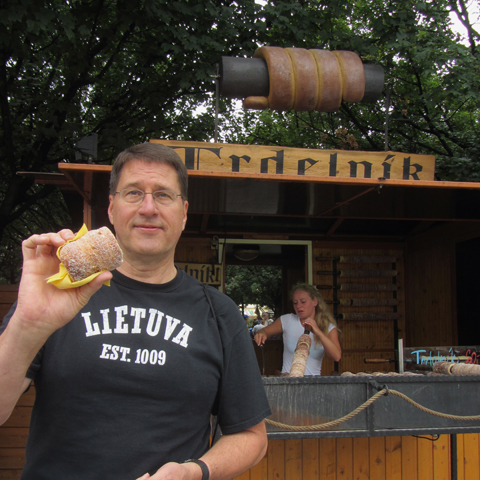
One of the most intriguing bits of street art looked like a large striped sleeping bag dangling over the sidewalk in front of a bakery. Once fully into the Old Town square, I found a street vendor peddling this twisted pastry treat…trdelnik…a prized Czech specialty, especially to tourists! Trdelnik is made from a yeast dough, wrapped around a cylinder, rolled in cinnamon sugar and then baked over an open flame. What’s NOT to love. Ye gods, but it was delicious!
Our Pilgrimage to the Infant of Prague
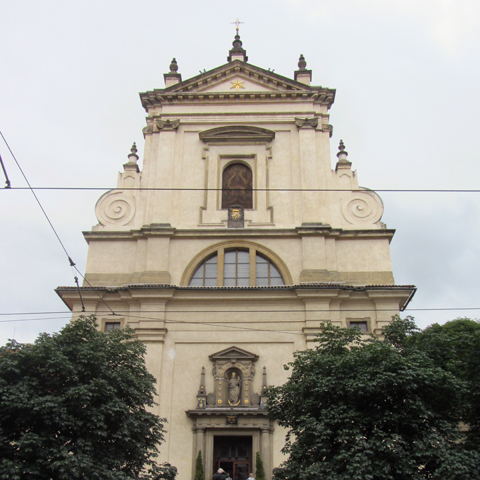
After experiencing the tourist mecca that was the old town, we were set free. We headed back across the Charles Bridge on a quest to find the church of Our Lady Victorious at the monastery of Discalced Carmelites — the home of the Infant of Prague. This one was for Grandma Vassel–my Slovak maternal grandmother. She maintained a small shrine/altar in her bedroom centered around a statue of the Infant of Prague which, like a god’s Barbie doll, came equipped with an extensive wardrobe of very elaborate, very detailed outfits color-coded to the liturgical season or a specific holy day. The standard outfit consists of a robe, a cape, an orb and a crown…all trimmed with a lot of lace and symbolism. Whenever we visited our maternal grandparents, one of the first things we did was “visit the shrine.” Not to venerate it, but to see how grandma had attended to it. In season, there were always vases of fresh flowers–I can still smell the lilac sprigs in the spring–with silk and plastic ones filling in during the winter months. But, of course, we were most fascinated by the different “outfits” the Baby Jesus wore. We were, after all, products of the 1960’s parochial school system and religious iconography was everywhere in our worlds.
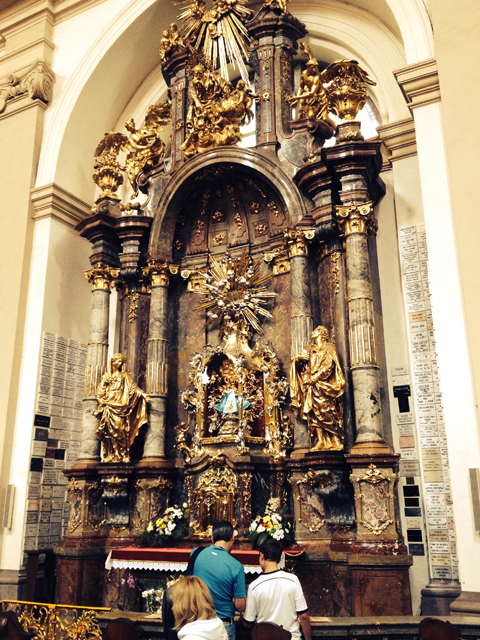
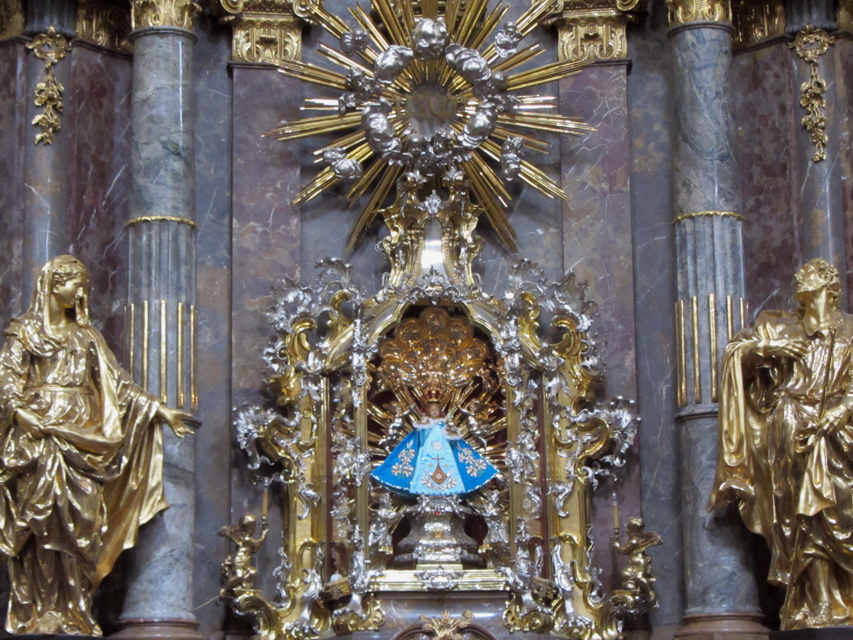
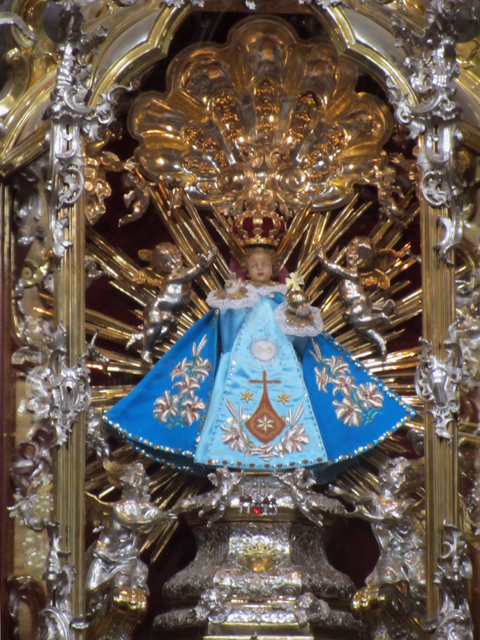
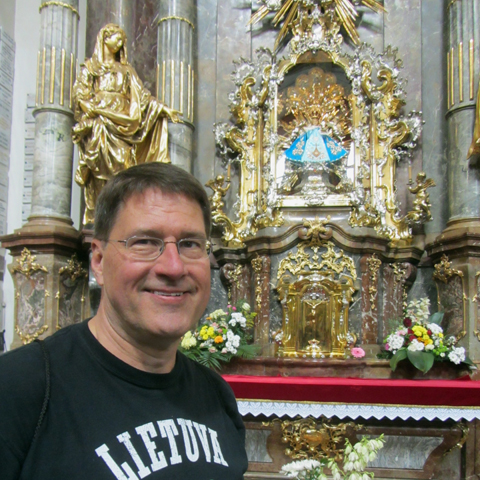
How embarrassing
But then, I had a moment. Pictures having been taken, we left the church and visited the adjacent gift shop staffed by the Carmelite nuns. Having transitioned from a lifestyle built around acquisitions to one of purging and decluttering, we are not, in general, souvenir buyers. We do make one exception: Christmas ornaments. We actively try to find an appropriate tree ornament that serves as a pleasant memento of each place we have visited. This was our quest as we canvassed the small shop. Suddenly…Eureka!…I found the perfect ceramic ornament festooned with an image of the I of P. I approached the counter to complete the purchase. As our transaction commenced, I remembered that I had secured my money and credit cards in a money belt as a caution against the pickpockets that operate among distracted tourist crowds such as those we had been a part of in the Old Town. With payment expected, there I stood before a habited nun, my hand thrust down into the front of my pants, aggressively fumbling around trying to retrieve the money from my money belt, all the while exhibiting a sheepish expression on my face that I sincerely hoped was conveying my apologies for my near-masturbatory actions in her shop. I have rarely wanted to leave a shop more quickly.
“Waiter? The czech please?”
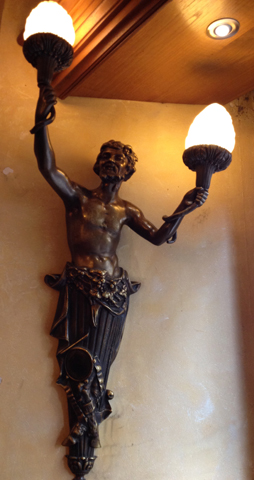
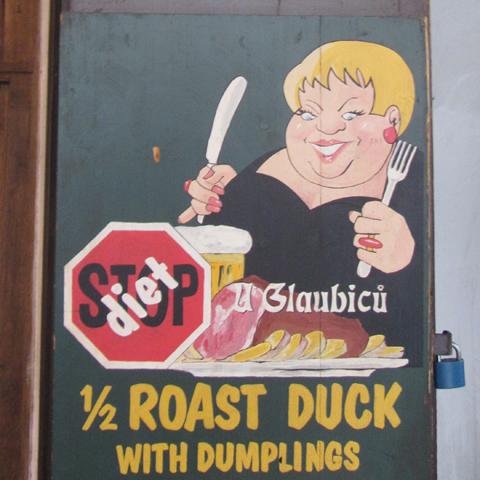
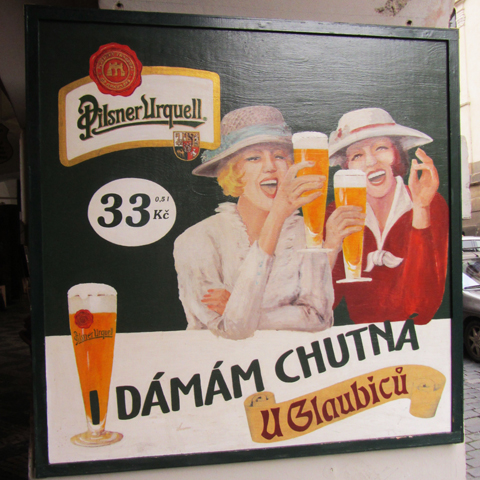
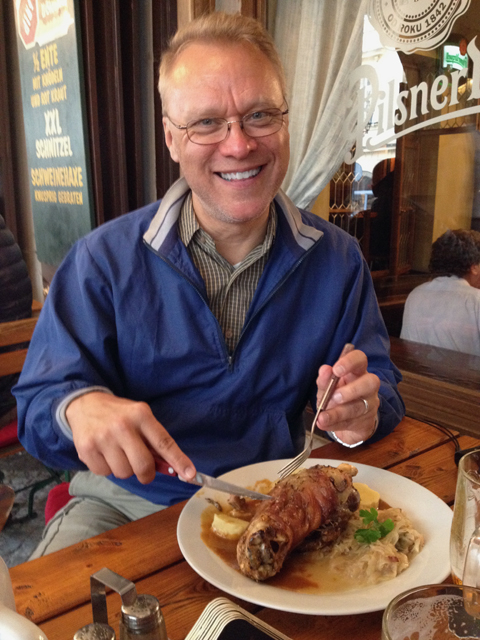
With my hand removed from my pants and clutching my purchase, we headed towards a main thoroughfare in search of a spot of lunch. We found a little cafe with outdoor seating under an arched gallery — a lucky find as it now began to drizzle — with local specialities and Czech beer on tap just below castle hill. The meal was delicious.
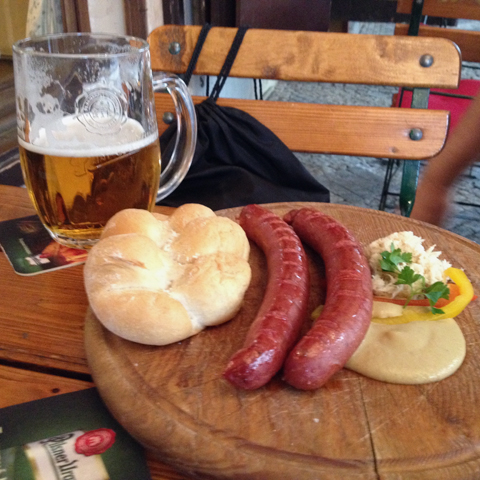
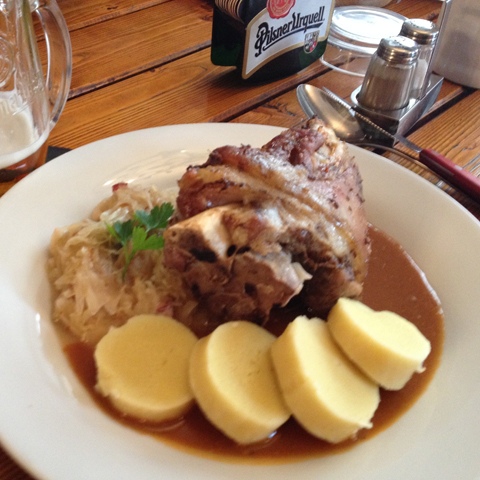
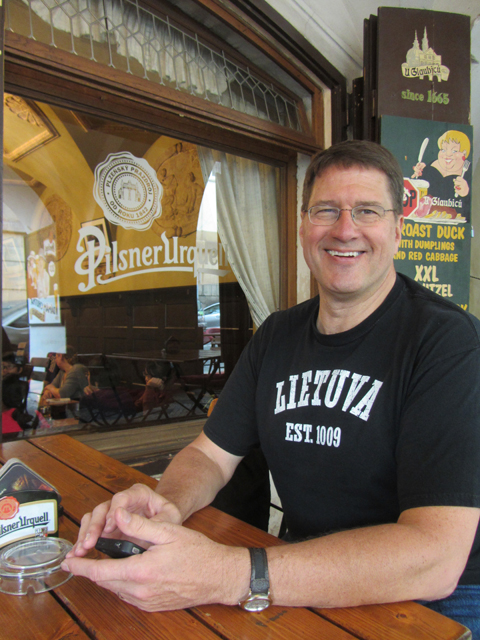
Czech-erboard
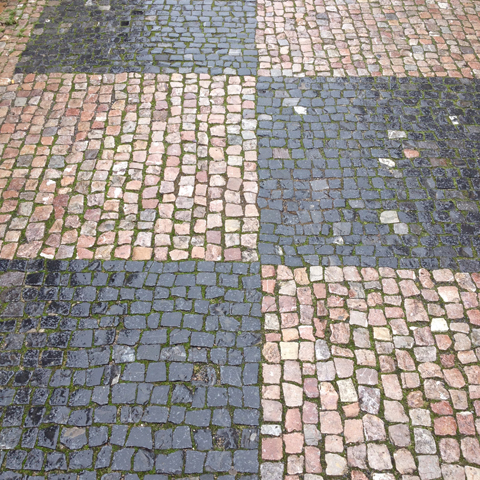
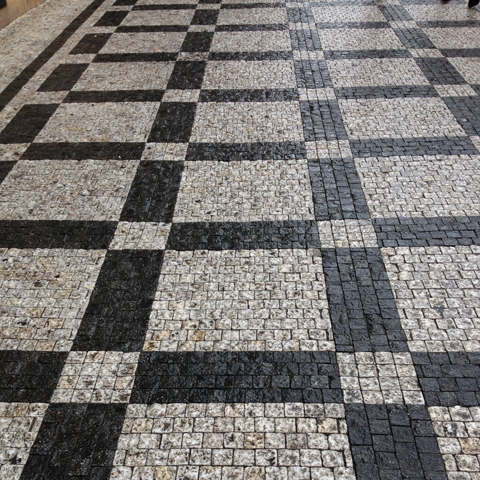
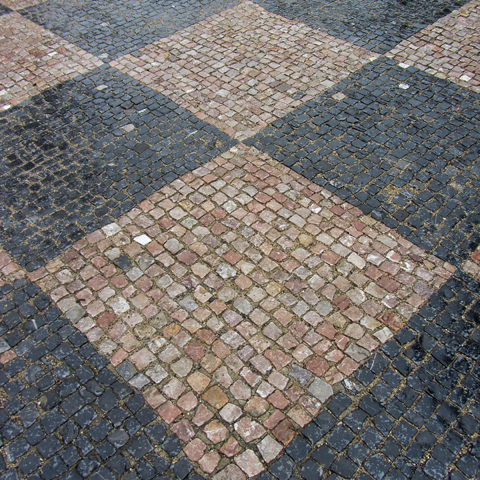
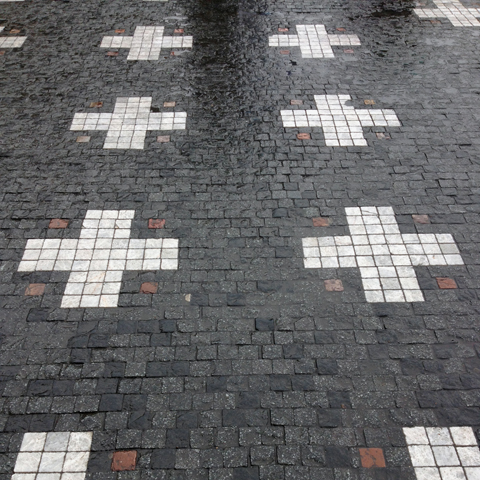
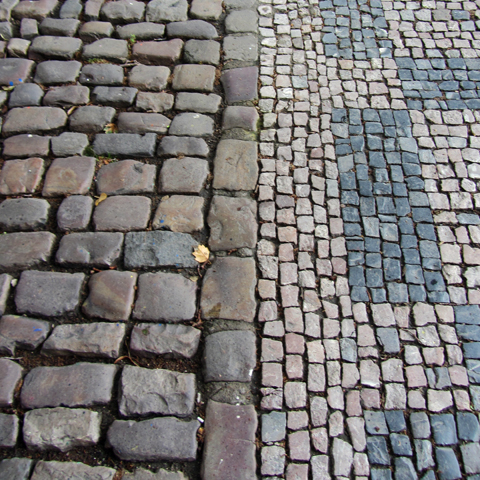
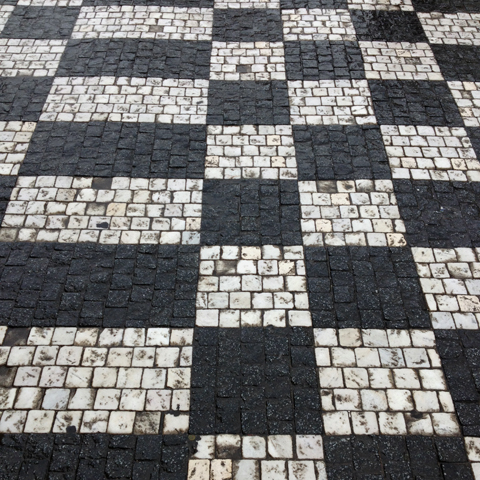
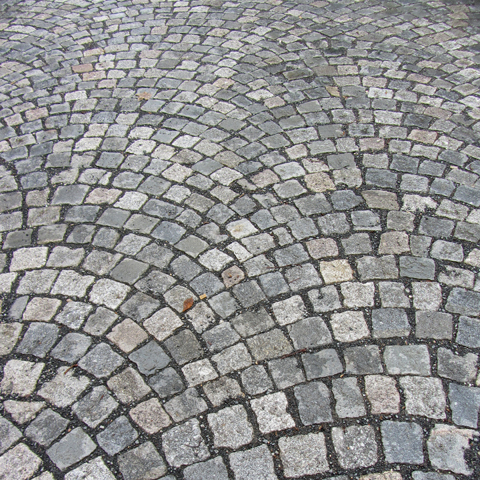
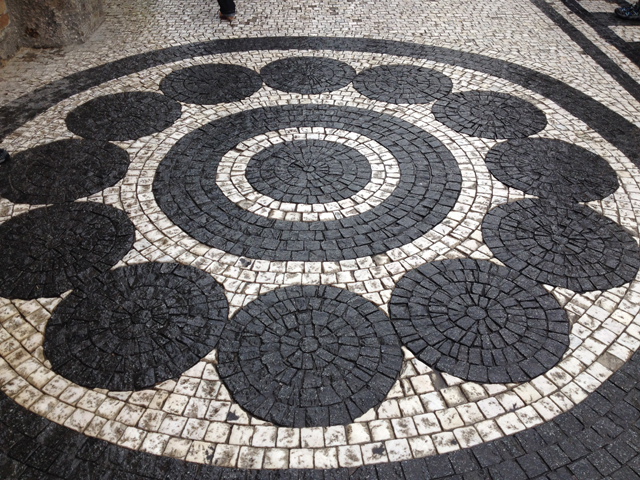
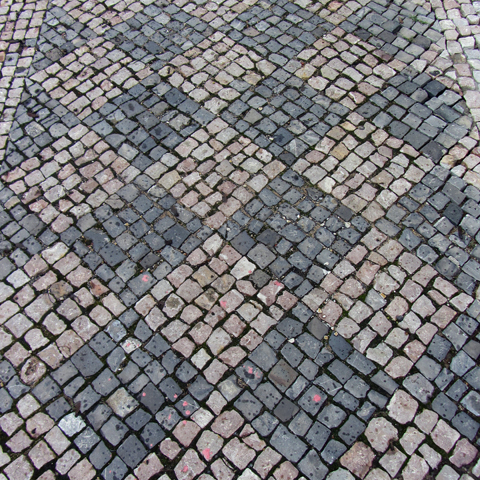
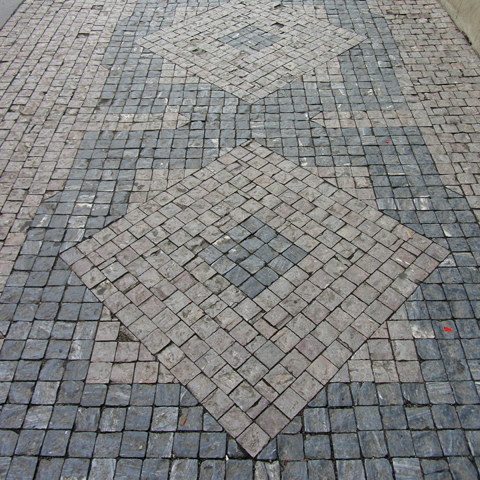
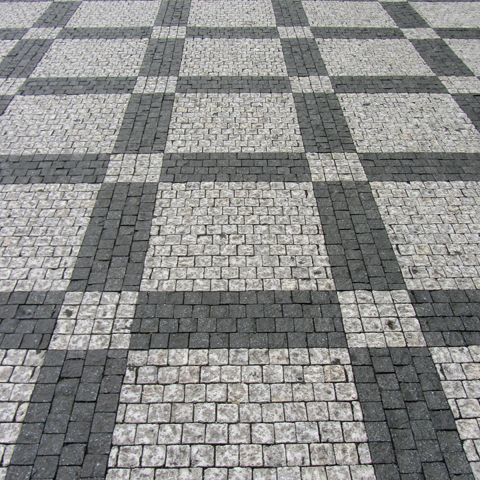
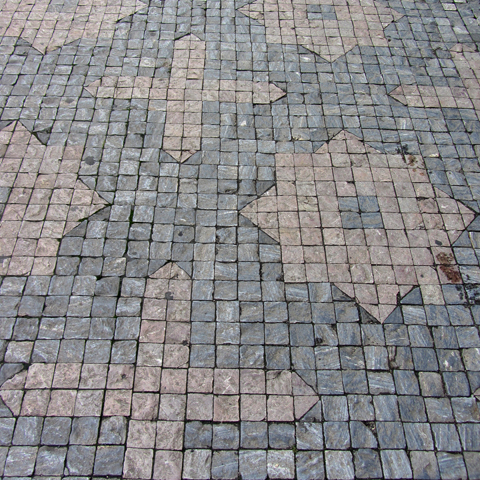
Finishing lunch, we headed back across the Charles Bridge to the Old Town square. Here, we were to meet up with our tour guide Suzi to ride a Prague public transit tram back to our hotel. Because we found ourselves walking on more examples as we left the restaurant, we realized how fascinated we had been by the intricate inlaid cobblestone work we kept encountering on streets, plazas and sidewalks as we explored the city. Here are a few images of this utilitarian street “art” that added yet another layer of visual beauty to this incredible city.
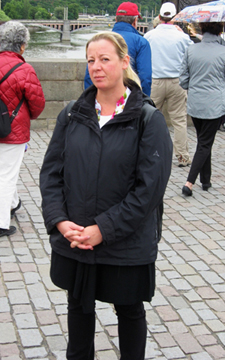
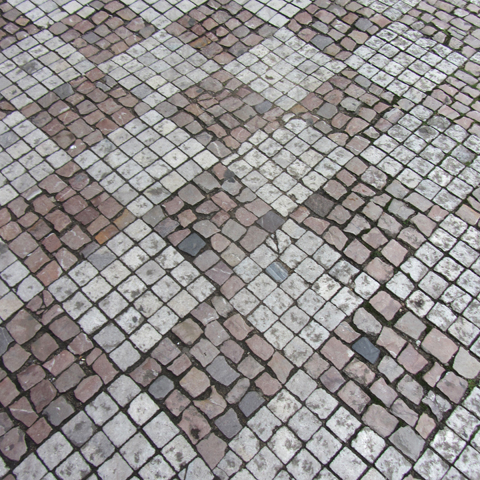
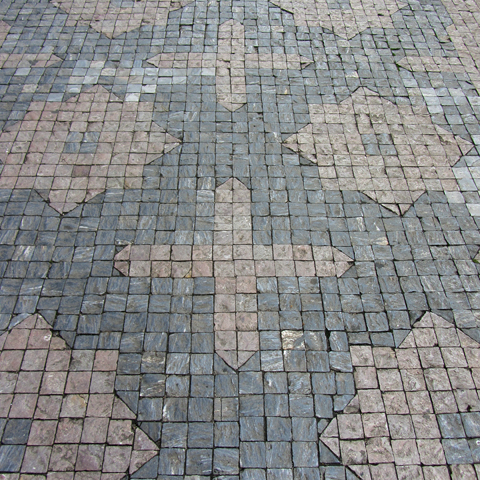
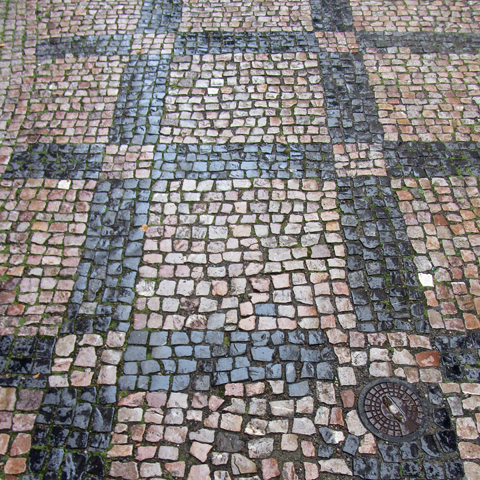
On the tram ride back, we passed by one of the architectural oddities of Prague: the Dancing House…or “Fred & Ginger” as it is affectionately known locally.
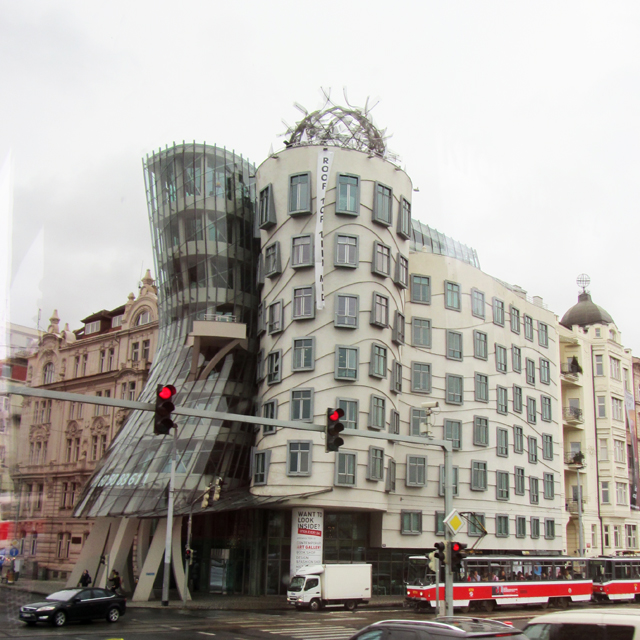
More food, please?
Our final group dinner was at a restaurant back up on castle hill. Our arranged mode of transportation was a pair of antique wooden trolley cars which carried us up to the Lví Dvůr restaurant. Rob and I arranged to eat with Suzi and Kati. They regaled us with stories of past tour groups and more as we wined and dined.
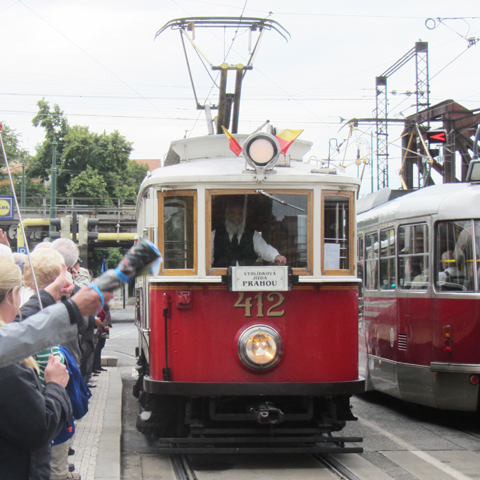
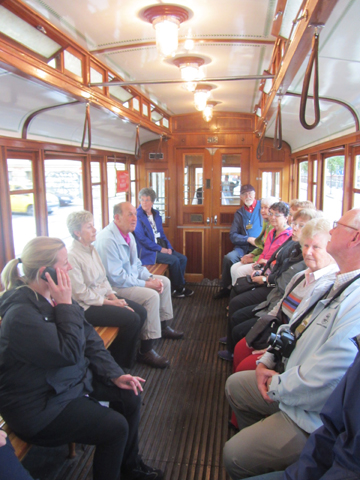
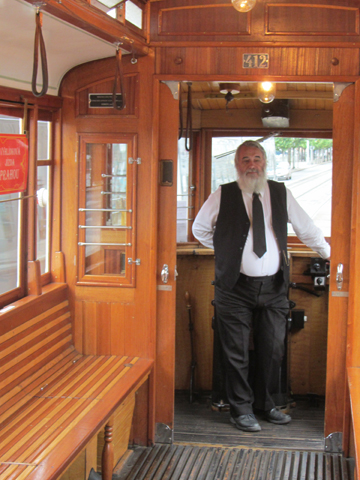
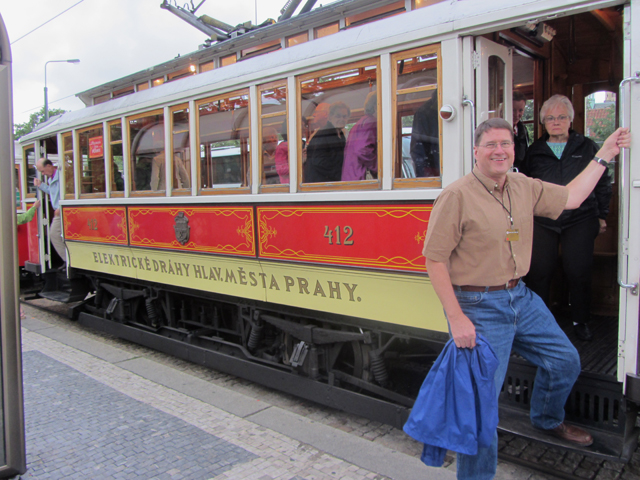
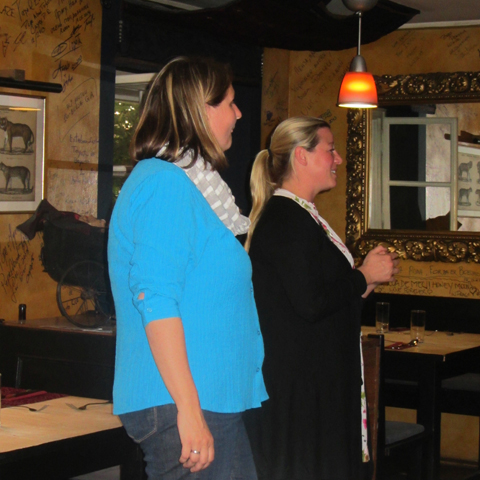
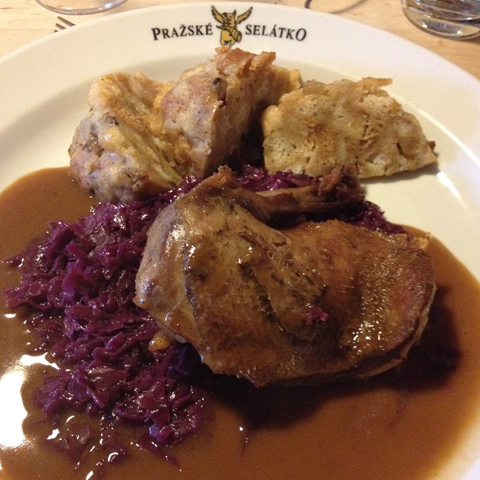
After dinner, we were driven back to the hotel to pack for our very, very early airport departure. It was a Full Prague day.
 A Taste of the Soviet Bloc